Hexawise recent updates
Hexawise recent updates
Export / Share links not appearing in some edge cases
Relatively unusual sequences of plan modification (sequence of behavior is an oft overlooked source of pairwise variation) would result in either or both of the "Export" and "Share" links not appearing in their normal spot in the top right of the central UI panel until the user navigated away or refreshed the page.
Improved performance when generating implied value pairs (constraints) - Part 2
Users were having to wait too long for the implied pair generation logic to be performed when working with very large test plans that were heavily constrained. We made two changes to dramatically improve the performance in many of these cases. The second of these changes involved breaking the large logic resolution problem into smaller, simpler, independent problems were possible, and is now complete.
Improved performance when generating implied value pairs (constraints) - Part 1
Users were having to wait too long for the implied pair generation logic to be performed when working with very large test plans that were heavily constrained. We're making two changes to dramatically improve the performance in many of these cases. The first change is complete.
Regression affecting the copy from a share URL function
Regression affecting "save caverage data as..." dropdown on the matrix chart
Color blindness support in the coverage matrix chart
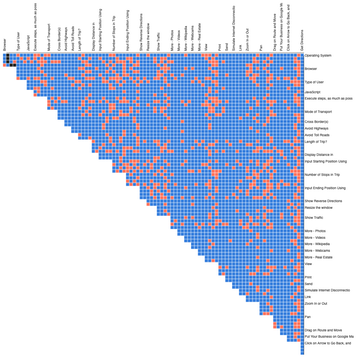
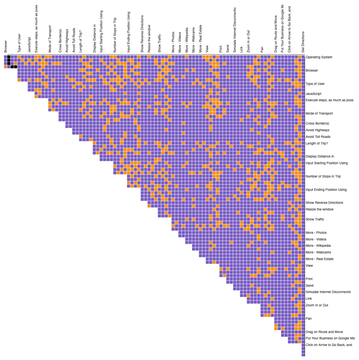
We've changed the default colors used in the coverage matrix chart, specifically to a more blue'ish color of green that is easier for people with red/green color blindness to differentiate.
There is also now a color toggle. Simply press the letter c on your keyboard to cycle through 3 available color themes if the default them is difficult for you to differentiate.
Zoom and pan in the coverage matrix chart
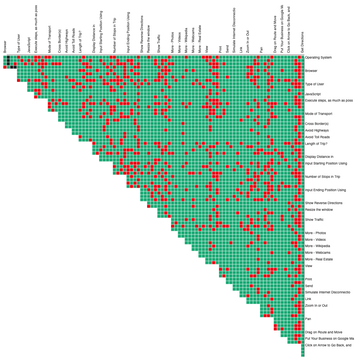
You can now zoom in and out of the coverage matrix chart using your mouse's scroll wheel or trackpad's scroll gesture.
Zoom out to get the big picture.
Or zoom in to get specific details.
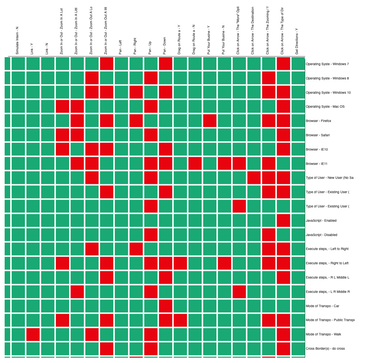
When you are zoomed in, click and hold your mouse button, then move your mouse to pan around the matrix chart.
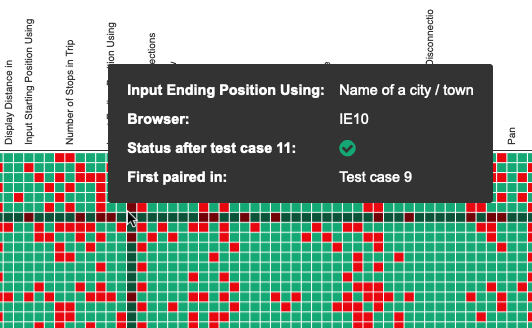
Pairing information upon hover in the coverage matrix chart
Now when hovering over cells in the coverage matrix chart with your mouse, you'll see a popup showing the two interactions, and in which test case they were first paired, or when they will be first paired.
Parameter name dropdown click
Clicking the dropdown arrow on the parameter name field to toggle on/off the auto-complete suggestions removed the previously typed text. It no longer does.
Automate: Not mentioning duplicate test case removal in all circumstances
When an automate Scenario or Scenario Outline was removing test cases that are duplicative for the set of parameters and/or parameter values selected in the Scenario or Scenario Outline, the tooltips about how many test cases are being applied did not always mention the duplicate removal.
Network test UI
Some usability improvements for the non-AJAX network tests.
Value name truncation in MS Edge browser
A pairwise defect with the MS Edge browser caused long value names not to be truncated in the Define Inputs UI.
Value expansion tooltip
Normally there is a tooltip for the value expansion icon in the Define Inputs UI that quickly shows you what the value expansions are without needing to click and open the dialog.
This tooltip would not appear for the value expansion after you edit the value expansion until you navigate away from Define Inputs and come back. This is now fixed.
Ctl/Cmd + F (find in browser) should locate truncated parameter and parameter value names
Hexawise's truncation of parameter and parameter value names was preventing the browser's local search in page functionality from finding parameter and parameter value names by their full, untruncated name. This now works as expected.
Column size change when hovering over long parameter names
Column width in the Define Inputs UI is now always consistent.
Parameter names and parameter value names with angle brackets in explanatory dialog
Parameter names and parameter value names written like <this> or <that> were rendered incorrectly in the explanatory modal for "2-way interactions means...".
Hexawise Automate: De-duplicate example data table and generated scenarios
If a Scenario or Scenario Outline includes a (small) subset of the plan's parameters, then it often results in some completely duplicate example data table rows or generated scenarios since the subset of the test case scenario included likely won't be unique (even though each generated test case is unique).
Hexawise Automate now eliminates these duplicates. You can see this most clearly by including <Test Number> and <Test Case> in your Scenario or Scenario Outline. The former will always be sequential, while the latter will skip both generated test cases that don't apply (that don't include selected parameter values) as well as test cases that would be duplicates based on the included parameters.
Large improvement in coverage matrix slider and animation performance
Drawing glitch in coverage matrix chart
With larger test plans some columns in the matrix chart would lose their column divider.
Entering password into Hexawise login session timeout dialog to reestablish session
This wasn't working and brought you to the full login page. It's now working.
Constraint dialog order reverses after error
If you attempted to create an married pair constraint that violates existing constraints, an error dialog explaining the issue is shown. Upon returning from the dialog back to the married pair constraint creation dialog, the order of the parameters could reverse from the order in which you clicked them. This has been resolved.
Project name truncation in manage plans dialog
Long project names were not properly truncated.
Network test UI
Small user experience improvements in the network test.
Hexawise Automate: New test automation export of language of TypeScript, and test framework of Cucumber using Cucumber Expressions
This was a specific customer request. Always eager to hear what language / test framework pairings will be helpful to add to Hexawise Automate.
Stuck progress spinner after large parameter warning in mind map view
When adding or editing parameters in the mind map view, the warning dialog for large parameters wouldn't dismiss after you OK'd the large parameter.